Philip Glass: The Fall of the House of Usher
Chamber opera in two acts | Saturday, 10.10.2026 | 20:00 Uhr
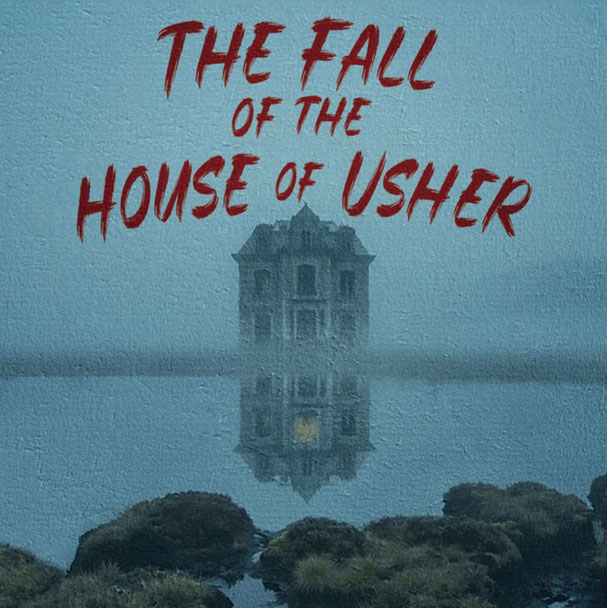

Chamber opera in two acts | Saturday, 10.10.2026 | 20:00 Uhr
In 1839, Edgar Allan Poe’s (1809–1849) famous story “The Fall of the House of Usher” was first published in *Burton’s Gentleman’s Magazine* in New York. As the inventor of modern crime fiction, Poe, with his fantastical horror stories, is considered one of the pioneers of psychoanalysis. In American literature, he is generally regarded as something of an outsider. Poe’s works often blur the boundaries between this world and the next, which is what makes them so fascinating.
In “The Fall of the House of Usher,” William is summoned by his childhood friend Roderick Usher, who asks for his help. Is what William experiences during his stay at the Usher house a dream or reality? A journey into his own past. Roderick’s strange love for his terminally ill twin sister Madeline, whose voice can be heard day and night in the house, even after she has been buried in the house’s underground dungeon.
The American Philip Glass (born 1937) is one of the most popular contemporary composers. His name is invariably associated with the artistic movement known as minimal music, a term first coined by the American Tom Johnson (e.g., “The Four-Note Opera”) and the British composer Michael Nyman (e.g., “The Piano”). Glass himself would classify only the music he composed between 1965 and 1975 as belonging to this movement and prefers to describe his works as “music with recurring structures.” His musical style is significantly influenced by Indian music and his mentor Alla Rakha. Glass gained worldwide recognition in 1976 with the opera “Einstein on the Beach”, which was followed by numerous collaborative projects with Robert Wilson. In the 1980s, he collaborated with Achim Freyer in Stuttgart on a Glass trilogy, including the world premiere of “Akhnaten”. Philip Glass has since composed more than 20 operas. He has become known to a wide audience through his film scores (Koyaanisqatsi, Dracula, The Hours, and many others).
Philip Glass’s music supports the harrowing plot with a floating, captivating soundscape that transports the listener into a kind of meditative trance. The apparent lack of action in the music, when considered in the context of the plot, underscores the nightmarish atmosphere of this horror ballad, which is based on the short story of the same name by Edgar Allan Poe. Glass has written the three main parts for tenor, baritone, and soprano. In addition to guitar, percussion, and synthesizer, he uses the conventional instrumentation of a chamber ensemble.
Additional performances: Wed, Oct. 14, 8:00 p.m. | Fri, Oct. 16, 8:00 p.m. | Sat, Oct. 17, 8:00 p.m. | Sun, Oct. 18, 7:00 p.m.
€ 35 | € 15 (reduced) | € 10 (high school students)
English
Lokhalle Freiburg, Paul-Ehrlich-Str. 5 | 79106 Freiburg
Saturday, 10.10.2026 | 20:00 – 22:00 Uhr
Organizer: Carl-Schurz-Haus | In collaboration with Opera Factory Freiburg
Copyright: D. Mohorič